1 July 2026
The Guilt of Caring for an Ageing Parent
There will be days when you question whether you are doing enough, and other days when you wonder how much more of yourself you can give. The aim is not to erase those feelings, or to become the perfect son, daughter, or carer. The aim is to move through this stage with more honesty.

There will be days when you question whether you are doing enough, and other days when you wonder how much more of yourself you can give. But I think the aim is not to erase those feelings, or to become the perfect son, daughter, or carer. I think the aim is to move through this stage with more honesty: how much of myself can I give to this process? How much of myself do I want to give to this process?
I have been thinking about the anxiety that comes with seeing an ageing parent’s name light up your phone.
It might be an ordinary call. A parent may call because they want to tell you something small that happened during their day, or ask where you are, or whether you’ve eaten. And still, somewhere in your body, there’s discomfort.

For me, this is one of the strangest parts of having an ageing parent. You see warning signs everywhere – in their fractured recollection of a story from your childhood, and their apprehension about seeing a doctor. In their refusal to cut down on the sugar in their tea, and the slowed pace in which they walk.
And as your parents change, so does your relationship with them. It doesn’t happen all at once. It happens slowly, through small adjustments. For me, I started to listen more carefully, and check in more often. I began to notice more when my mother would forget things, and when she was being avoidant of self-care. And as a result, alongside all the love I have for her, other feelings began to appear.
There was guilt and worry. There was impatience, sometimes. And the constant refrain of “Am I doing enough?”
These are uncomfortable thoughts to admit. We expect ourselves to feel grateful, patient and tender. We expect love to make the hard parts easier to bear, but love doesn’t protect you from uncertainty, or anxiety, or even the existentialism that comes with watching a parent age.
During a recent conversation on the Wellness Curated podcast with psychologist and systemic relationship coach Darya Haitoglou, I found myself thinking about how little preparation we are given for this stage of life.
This lack of preparation is something Karl Poonawala recognised when he founded Balance Healthcare, an initiative created to provide learning resources for people as they move into caregiving roles. Karl, whose work also includes investing in healthcare organisations, has long been interested in how families can be better supported before they reach a point of crisis. As he told me, “You could be in the middle of building your own career, or trying to build your own relationship, and then suddenly have to navigate a situation that no one ever prepared you for. Many carers feel as though they’ve been thrown into the deep end, with no one there to guide them through.”
For Karl, part of the work is helping families realise that support does not always have to begin with something complicated. “Actually, the solutions can be very simple,” he said. But before families can reach those solutions, many first have to understand the relational shift that has taken place.
The Changing Relationship Dynamic

Early in my conversation with Darya, I used the phrase ‘role reversal’ to describe the changing dynamic between an adult child and an ageing parent. Darya gently corrected my thinking. “Treating an ageing parent as a child can wound their dignity,” she said. “An ageing parent is still a parent. An elderly person is still an adult.”
I think this is one of the hardest parts of caring for an ageing parent: learning how to support someone’s safety while still respecting their personhood. To ask what would feel respectful to them. To involve them in decisions. To remember that protection should not come at the cost of making them feel controlled or disregarded.
That question of personhood also sits at the heart of the work The Mood Space has begun doing with older adults. The founders of the Mumbai-based mental health organisation told me that while eldercare often focuses on physical needs, many families were noticing something harder to address: parents who were speaking less, withdrawing from hobbies, or seeming less engaged with life.
The Mood Space shared the example of one of their clients, a 57-year-old woman experiencing early onset dementia. “Often, when people hear the word dementia, they immediately focus on memory loss,” they said. “But there is still so much identity, personality, emotion, and capability that remains.” For their client, companionship meant conversation, cognitive stimulation, and moments that helped preserve her confidence and independence.
For me, that feels very close to what Darya was saying about dignity. Care is so much more than managing decline. It has to make room for the person who is still there.
The Guilt of Not Doing “Enough”
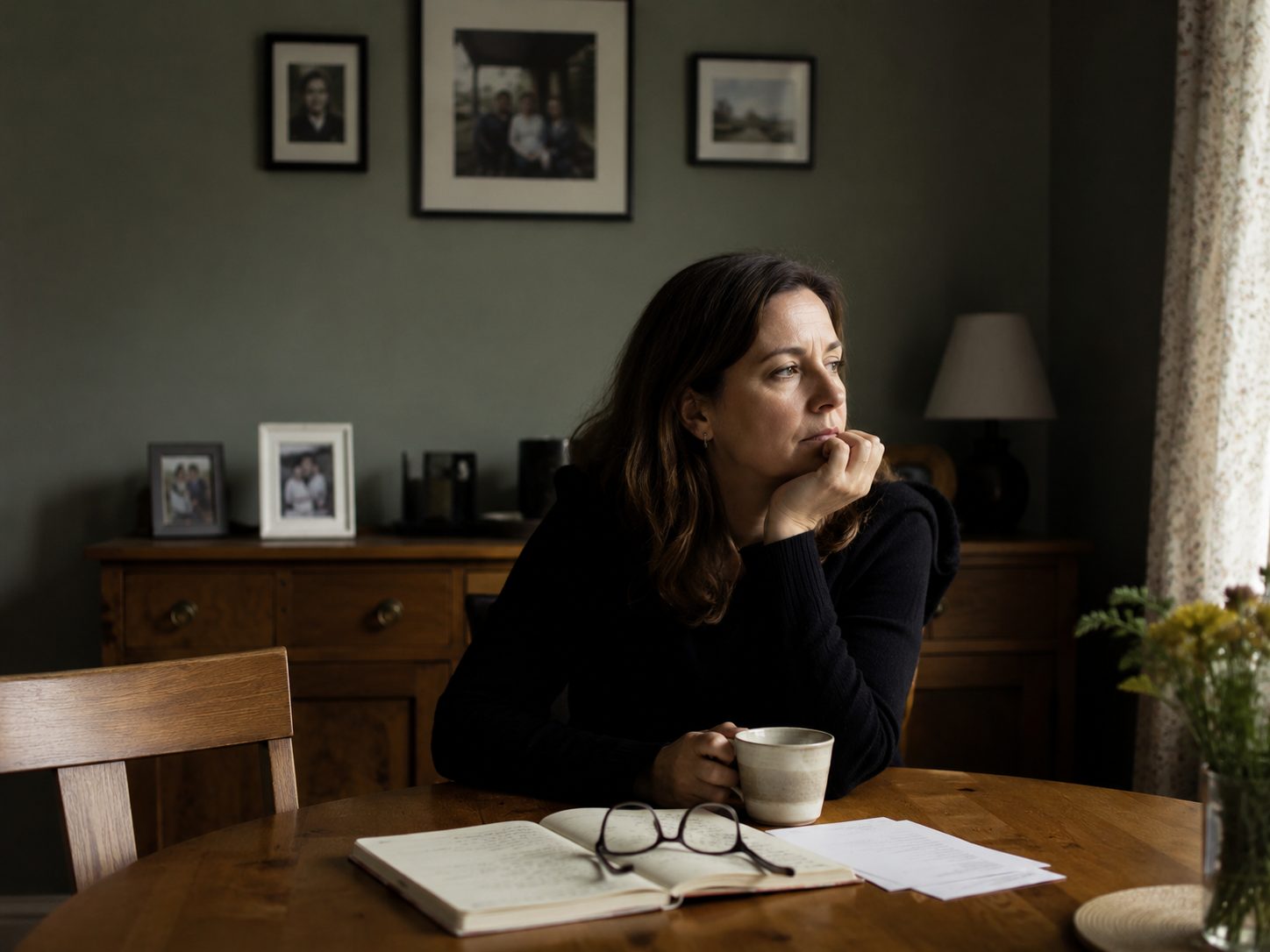
My conversation with Darya was one of the more emotional podcasts I have filmed, as so much of what we discussed reminded me of my own feelings about my mother. As she gets older, I have often questioned whether I’m doing enough – and whether it’s even possible to do enough. Something that I spend a lot of time considering is: What is “enough?” Does my “enough” look different from someone else’s, and what would it look like to let go of some of the worry and guilt I have been carrying?
Darya highlighted some research that I found interesting. She said that studies have pointed to a higher mortality risk in carers experiencing mental and emotional strain, relative to non-carers. And I have to wonder – at what point does caring become self-erasure? At what point does familial attachment become maladaptive? These are uncomfortable questions, the kind I find difficult to sit with, myself. But something that became evident from my conversation with Darya is, you aren’t doing anyone any favours by ignoring these questions. Yes, they might be terrifying to reckon with. Yes, you may have grown up being told that choosing yourself is selfish.
But what I’ve come to realise is that you aren’t helping your parents by neglecting yourself. You aren’t alleviating their pain by dismissing your emotions – be it grief, anger, fatigue, or simply the desire to keep living your own life.
You may never do “enough” for your parents, but equally, you may never do enough for yourself. The real obstacle is finding that balance, and trying not to judge yourself for it.
The Anxiety of Anticipatory Loss

There is another part of caring for an ageing parent that feels difficult to name: the grief that begins before anything has happened.
It’s not grief in the traditional sense. Your parent is still here. You can still call them. They can still annoy you, reassure you, ask you repetitive questions, tell you the same story about their youth, again. And yet, something in you is already grieving. You’re grieving the version of them that felt invincible. The one that taught you your times tables. The one that would run with you to make sure you caught the school bus. The one that could recall every story from your childhood by heart, as if it had happened yesterday.
I think this is part of what makes witnessing your parents age so emotionally disorienting. You are still in the relationship, but you are also becoming aware of its fragility. Ordinary things begin to carry more weight. A missed call feels different. A delayed reply feels different. A small change in their voice can stay with you for the rest of the day.

And because this grief is anticipatory, it can feel almost illegitimate. You may feel dramatic for naming it. You may tell yourself that nothing has happened yet, that other people have it worse, that you should simply be grateful. But, speaking from my own experience, the body often understands change before the mind has the language for it. Sometimes the anxiety is not only about what is happening now. It’s about the fact that one day, something will happen, and no amount of care or preparation will prevent the inevitable.
There’s a more positive way to look at this, though. In our conversation, Darya described anticipatory grief as something that can help people become “better adjusted to the death of their elderly parent afterwards.” It is a painful idea, but also a strangely compassionate one: perhaps naming the grief before the loss is part of how we begin to live with it.
My takeaway
What stayed with me most from this conversation is that caring for an ageing parent is not something you can do perfectly. I wish someone had told me that sooner.
There will always be moments of worry, guilt, fear and frustration. There will be days when you question whether you are doing enough, and other days when you wonder how much more of yourself you can give. But I think the aim is not to erase those feelings, or to become the perfect son, daughter, or carer. I think the aim is to move through this stage with more honesty: how much of myself can I give to this process? How much of myself do I want to give to this process? Remember that your own life, body and emotions need tending to as well.
Listen to the episode
Caring For Ageing Parents Without Losing Yourself
with Darya Haitoglou