6 August 2026
What Do We Do With What We Can’t Explain?
What if staying open to the unknown requires us to become more discerning, rather than more certain? After my conversation with numerologist and spiritual intuitive Ginni Aneja, I found myself thinking about angels, extraterrestrials and the space between dismissal and unquestioning belief.
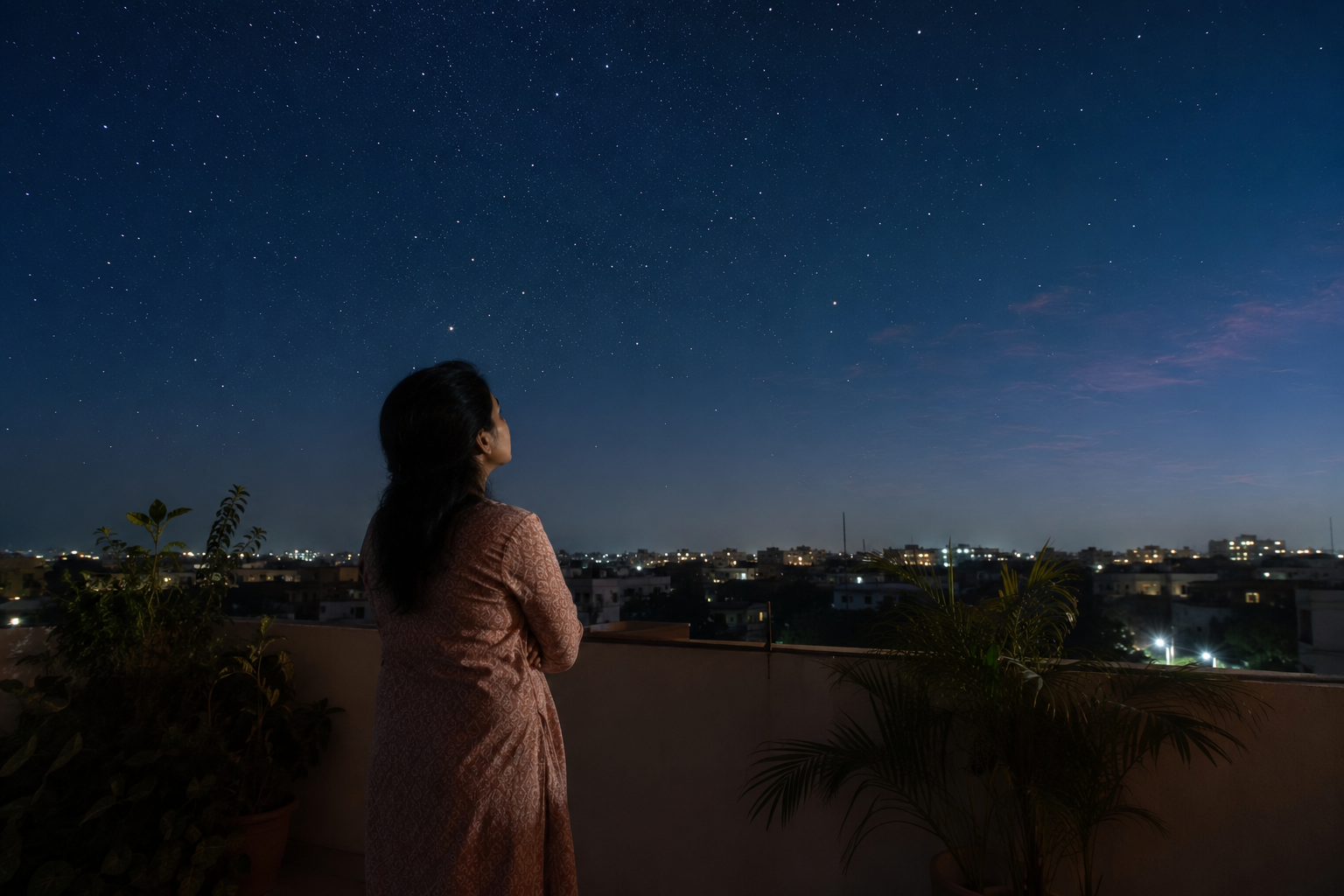
What if staying open to the unknown requires us to become more discerning, rather than more certain?
There are questions human beings have carried for centuries. Are we alone in the universe? Does consciousness survive the body? Why do people across cultures describe beings, lights, presences and messages that seem strangely similar?
The language changes with time. One tradition may speak of angels, another of ancestors, spirits or messengers from another realm. Today, similar experiences may be described through extraterrestrials, unidentified aerial phenomena, altered states or higher dimensions.
We desperately want to know whether reality is larger than what we can see. The possibility can offer comfort during grief and a sense that our lives belong to a wider story. A tapestry we form part of — no loose threads, no accidental stitches. Yet the desire for meaning can also make us eager to accept an answer before we have understood the question.
That tension stayed with me during my conversation with numerologist and spiritual intuitive Ginni Aneja. We explored angels, extraterrestrials, astral realms, channelling and the Law of One. Ginni spoke about sensing presences, receiving intuitive messages and seeing unusual lights during group meditation. She understands these experiences through a belief in extra-dimensional beings and a universe connected by one consciousness.

What interested me most was the challenge of holding two things together: respect for an experience that feels deeply real to someone, and the responsibility to ask how we know what we think we know. How do we navigate the spiritual and the scientific, the eccentric and the existential? And do we need to pick one or the other?
The experience and the meaning we give it
Supernatural experiences are often felt before they are comprehended: as a presence that seems to fill the room, or an unmistakable sense that something has shifted.
The meaning may only become clear later.
A person might initially dismiss an unusual dream, only to find that its message continues to return at important moments. A light in the sky may remain a curious memory until another experience gives it new significance. What first appears random can gradually become part of a person’s understanding of their life.
I think this is why these encounters are often so difficult to communicate. Their importance does not always lie in what was visibly seen or heard. It lies in the change they create within the person who experienced them.
They may bring comfort after a loss, encourage someone to trust their intuition or make them feel accompanied during a period of isolation. They may prompt questions that alter the way a person thinks about consciousness, death or their place in the universe.
Perhaps we do not always need to reduce an experience to a single explanation. Sometimes its significance is revealed through what it awakens in us, and through the direction in which it asks us to look.
Why mystery draws us in
Mystery creates an open space, and it is natural that we want to understand what may be waiting inside it.
When people across different backgrounds describe lights, presences, messages or encounters that seem to echo one another, it can be difficult to dismiss them as entirely unrelated. These accounts may suggest that there are aspects of consciousness and reality that we have not yet learned how to recognise, measure or explain.
Past-life regression therapist Dr Trupti Jayin believes that culture influences how such encounters are interpreted. She told me:
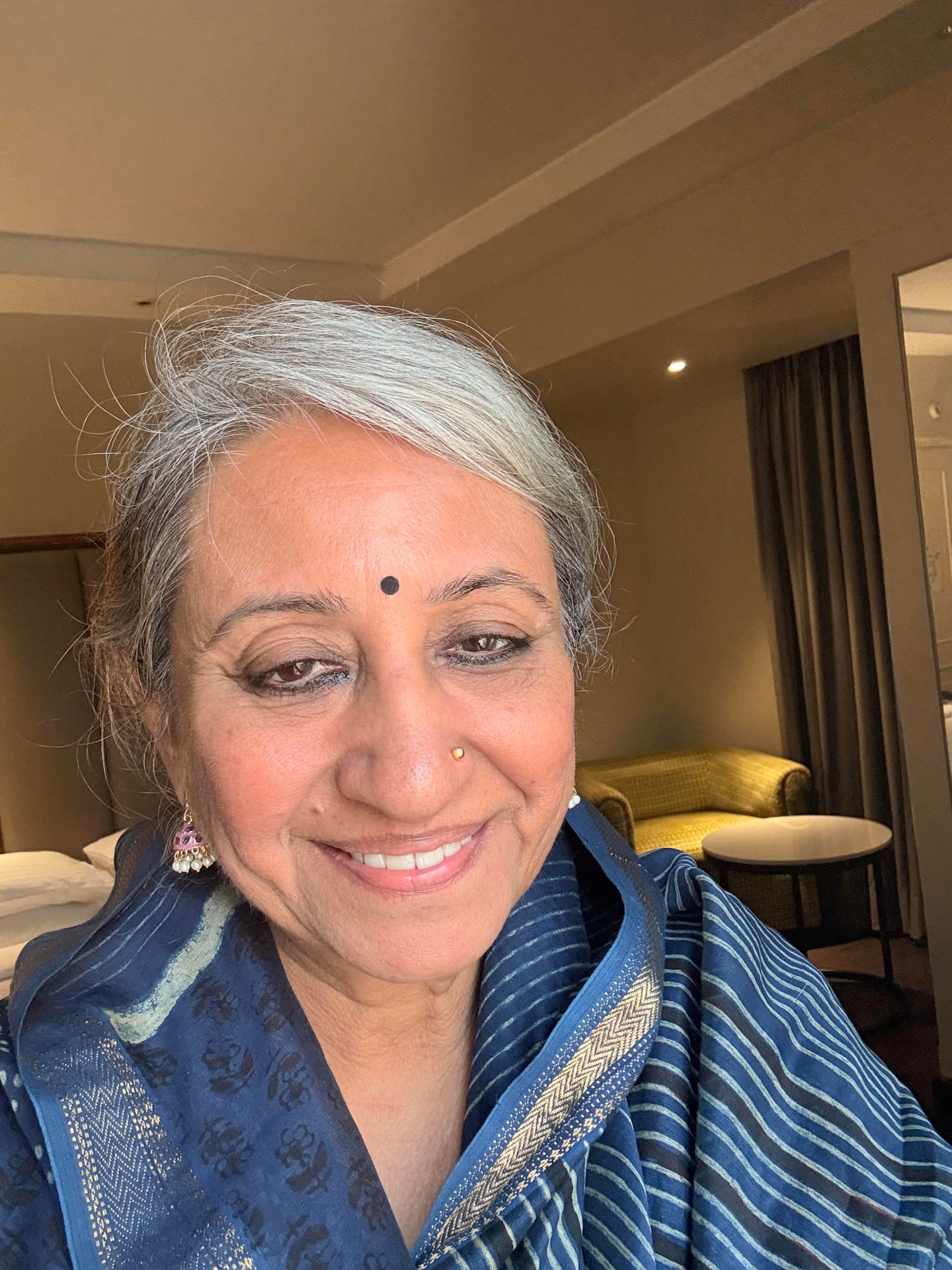
“People experience things according to their cultural beliefs, educational input and family expectations. The mind is subtle and its projections are coloured by what is within it. The underlying reality is the same.”
The internet has made it possible for people who once felt alone in these experiences to find others who have seen or sensed something similar. A private encounter can become part of a much larger conversation. Patterns begin to emerge, questions become harder to ignore and subjects once pushed to the fringes enter public discussion.

At the same time, the speed at which information travels means that fact, interpretation and speculation can become intertwined. A declassified document, an ancient text or an unexplained recording may hold genuine significance, while still leaving room for more than one conclusion.
I do not think discernment requires us to close ourselves off. It asks us to remain attentive: to notice what resonates, examine where an idea has come from and stay open to the possibility that our first explanation may not be the only one.
Perhaps mystery is valuable precisely because it resists immediate certainty. It invites us to keep looking, keep questioning and allow our understanding to expand as new experiences and evidence emerge.
What changes when we believe we’re not alone?
The belief that consciousness extends beyond the physical world can change the way we understand our own lives.
If we see ourselves as part of something larger, death may feel less like a complete ending. Grief may still be painful, but the possibility that connection continues in another form can offer a different way of living with absence. A sensed presence, a dream or an unexpected sign may become a reminder that love is not always limited by what can be physically seen.
When I spoke to Dr Jayin, she described how regression experiences can sometimes help people move towards what she referred to as “peaceful acceptance”, offering a way to understand loss and feel supported through it.
Psychic medium Taminder Walia has encountered a similar search for reassurance in her own work. She recalled a mother who came to her after losing her son, wanting only to know whether he was at peace. During the session, Taminder received information that was intensely personal and specific — details the mother said nobody else knew except her and her son.

For Taminder, repeated experiences of this kind have shaped her understanding of what may happen to consciousness after death:
“Can I prove these experiences scientifically? No. Nor do I try to. But after witnessing hundreds of such moments, I have come to believe that consciousness is not limited to the body. The body may complete its journey, but I feel the soul continues to exist in a form that is beyond our physical understanding.”
This way of thinking can also alter how we relate to the living. If consciousness is interconnected, then our choices do not end with us. The energy we bring into a room, the kindness we offer and the harm we cause all become part of a much wider exchange.
For me, this is where spiritual ideas become most meaningful. Their value lies partly in what they ask of us here. Believing in guides, angels or other forms of intelligence may offer comfort, but it can also invite greater responsibility. If we are being supported, perhaps we are also being asked to become more attentive to the support we offer others.
Whether these beings exist exactly as we imagine them may remain an open question. What feels more immediate is the possibility that we are less separate than we believe, and that our lives may be woven into relationships we do not yet fully understand.
The value of interconnectedness
The idea that all life is connected appears across spiritual and philosophical traditions. It can be understood cosmically, religiously or through the recognition that our actions reach beyond us.

Our choices shape families, communities and environments. The way we treat another person changes the emotional world they carry into their next interaction. In that sense, separateness has always been less complete than it appears.
We do not need proof of extraterrestrial communication to consider the value of interconnectedness.
If the idea encourages compassion, humility and awareness of our effect on others, it has practical meaning. If it becomes a way to divide people into the spiritually awakened and the spiritually inferior, something essential has been lost.
The same applies to stories about the unexplained. Their symbolic meaning may endure even when their literal truth remains uncertain. Angels may represent protection. Ancestors may provide a language for memory and continuity. Other worlds may remind us that human understanding is incomplete.
A metaphor does not become worthless because it cannot be proved scientifically. It simply belongs to a different kind of conversation.
My takeaway
Scepticism is often treated as the enemy of wonder. I have begun to think it can protect wonder from being replaced by easy answers.

There is space between dismissal and unquestioning belief. It is a space where we can listen, ask difficult questions and remain willing to revise what we think we know. It allows someone’s experience to retain its meaning without requiring the rest of us to accept one interpretation of it.
Perhaps that is the most grounded way to approach the unknown: curiosity about what may exist beyond our present understanding, paired with attention to evidence, context and the effect a belief has on the person holding it.
Curiosity opens the door. Discernment helps us decide what should be allowed through it.
Listen to the episode
Aliens, Angels and Higher-Dimensional Beings Explained
with Ginni Aneja